
Roof moisture and heat patterns
Thermal roof scans
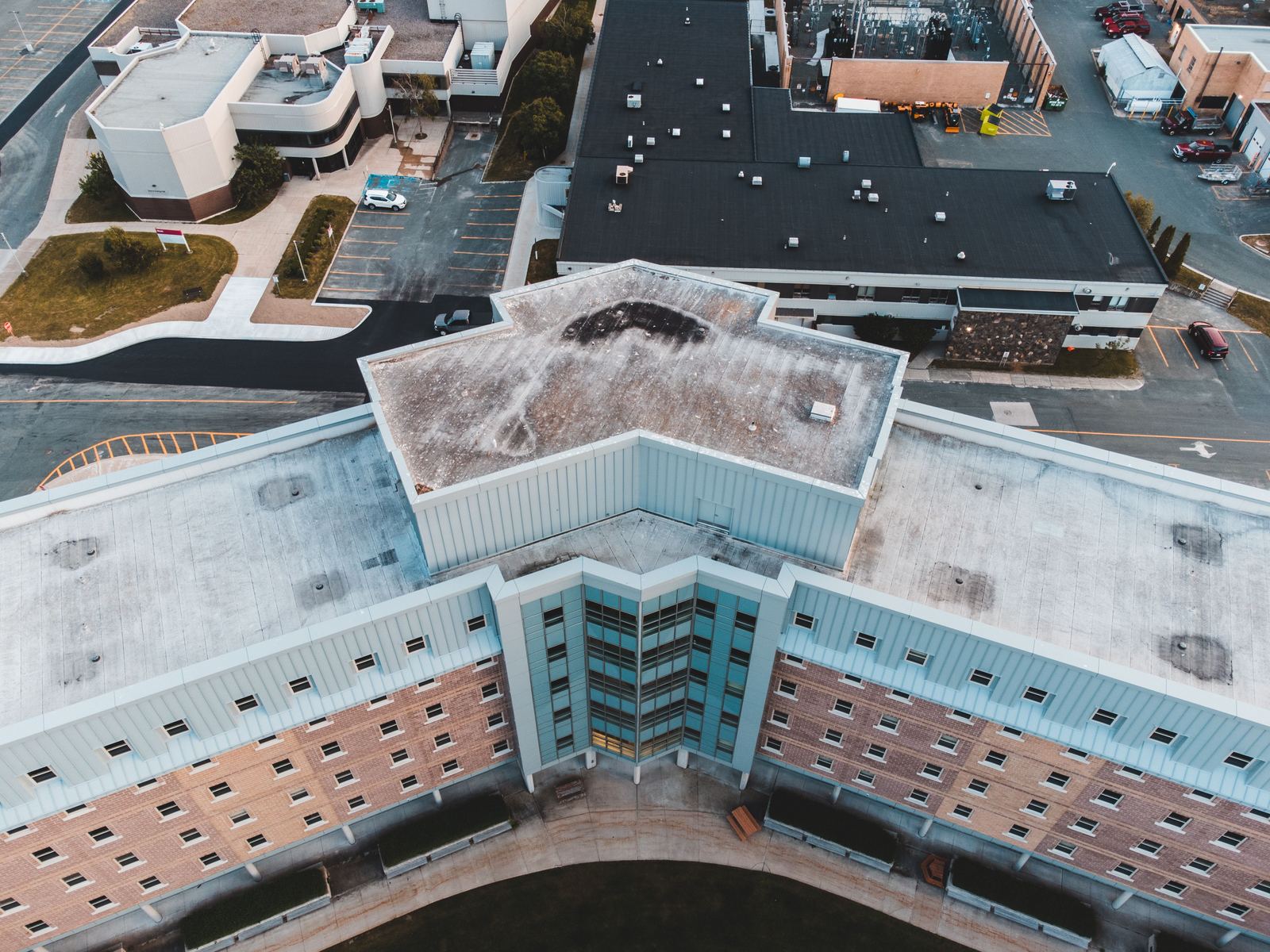
Aerial thermal imaging can make temperature differences across a roof easier to see. I pair those images with standard photographs so your roofer or facility team has context for where to look next.
The practical version
What this service is—and what it isn’t
This service is most useful on larger low-slope or commercial roofs when the weather, roof assembly, and timing create enough thermal contrast. Before scheduling, I’ll ask a few questions about the roof type and recent weather so we do not fly a scan that is unlikely to produce useful information.
A good fit for
- Commercial and low-slope roofs
- Maintenance planning before a full roof replacement
- Finding areas that deserve closer review
- Documenting a roof for a contractor or facility file
Important limits
- It does not prove that a leak is present
- It does not identify the exact source of moisture
- It is not a certified thermography report
- Wet weather, wind, shade, and roof construction can affect the result
Deliverables
What you receive
Radiometric thermal images captured over the agreed roof area.
Overhead and oblique images to show vents, seams, drains, and roof context.
Annotated areas of interest and practical notes for follow-up.
Scheduling
The flight is planned around the job—not the other way around.
Thermal roof work is scheduled around conditions, not just an open spot on the calendar. I’ll confirm the expected weather window and explain why the timing matters before the flight.
Questions
Common questions
Can you tell me whether my roof is leaking?
I can document patterns that may be consistent with moisture or heat loss. A roofer or other qualified professional should confirm the cause.
Do you need roof access?
Usually not for the initial aerial scan. Ground access and permission to operate near the property are still required.
What roof types work best?
Larger low-slope, membrane, and commercial roofs are generally the best candidates. I review the roof type before quoting.
Request a quote
Start with the address and what you need to see.
I’ll review the site, ask any needed questions, and reply with a practical scope.